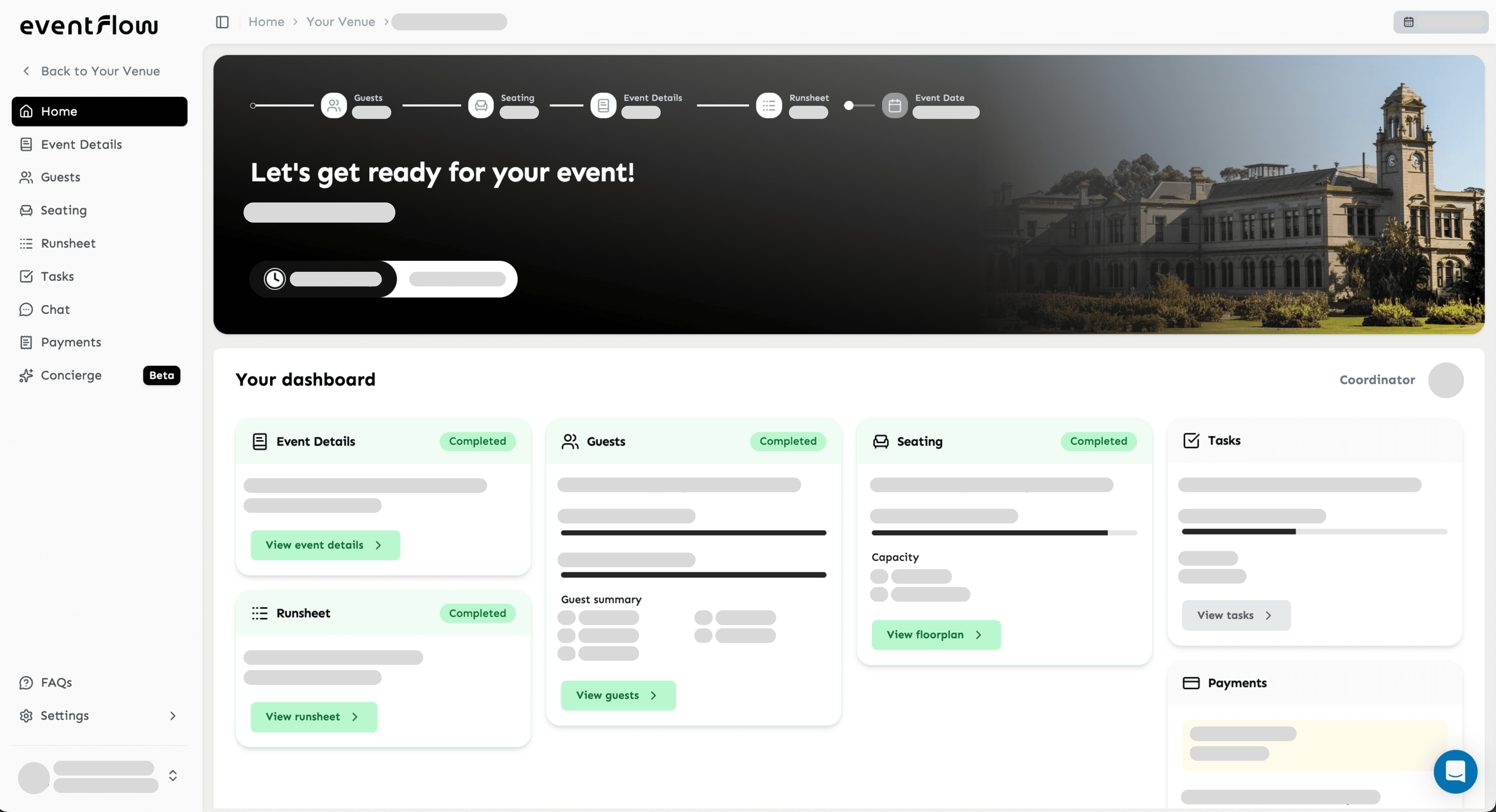
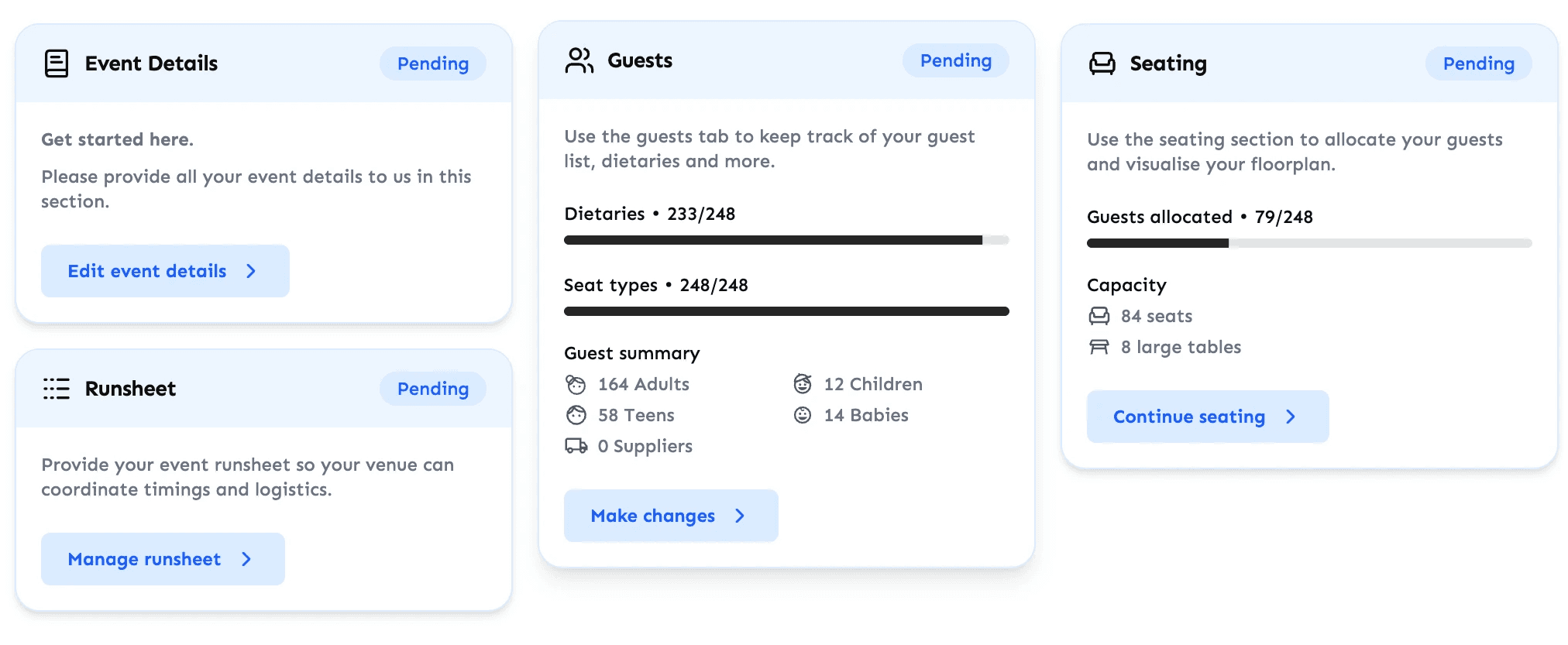
The client-facing portal where your client can lock in seating, menu selections, guest dietaries, and add-ons. You get every detail submitted to you without the back-and-forth.



Venues that choose us
From local wineries to stadiums











Why event planning still happens in Excel, Word and Email
Most venues plan events the way they did 20 years ago. Coordinators chase clients for dietary counts. Seating changes come through the afternoon before the event. Documents live in email threads. Spreadsheets get version numbers in the filename.
It works, but it's also costing your team hours every week that nobody's counting.
Everything clients need to plan.
Everything you need to run the event.
Everything happens in the portal. Nothing gets lost in someone's inbox.
1
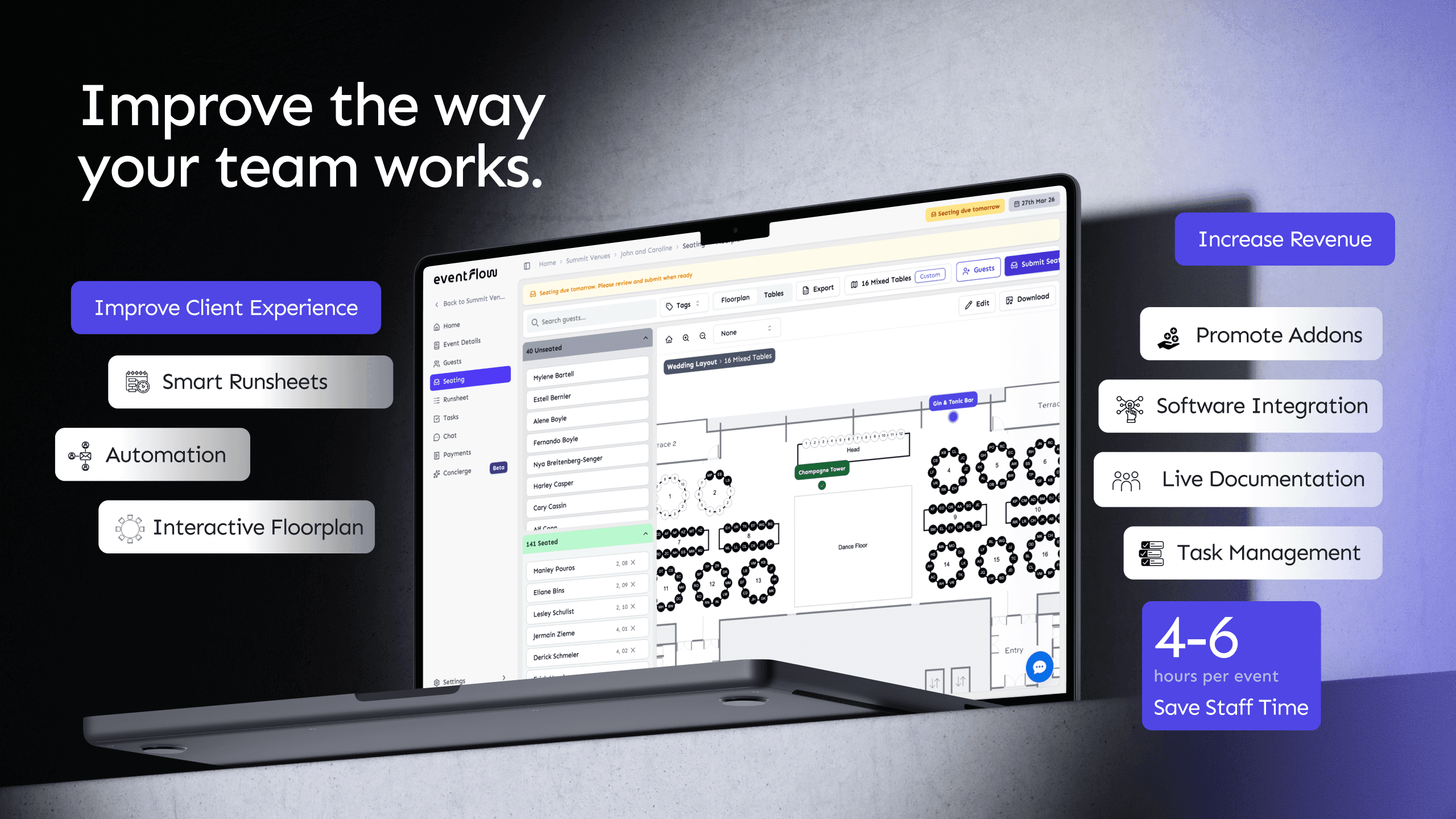
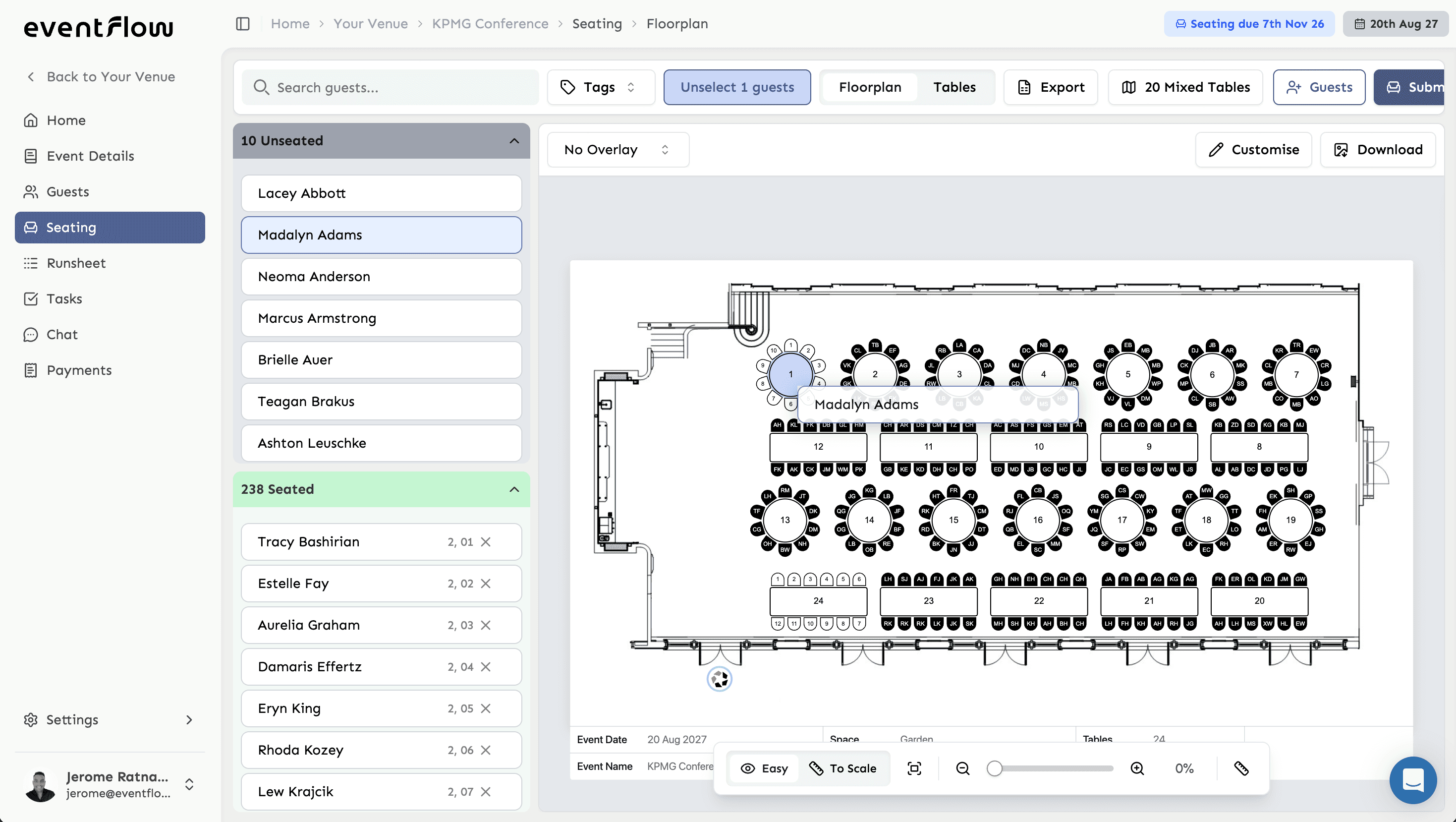
Seating plans your clients can interact with.
You build the floor plan and lock the layout. Your client allocates their guests. You approve it. The version-controlled spreadsheet, or third party floor plan builder? Gone.
2
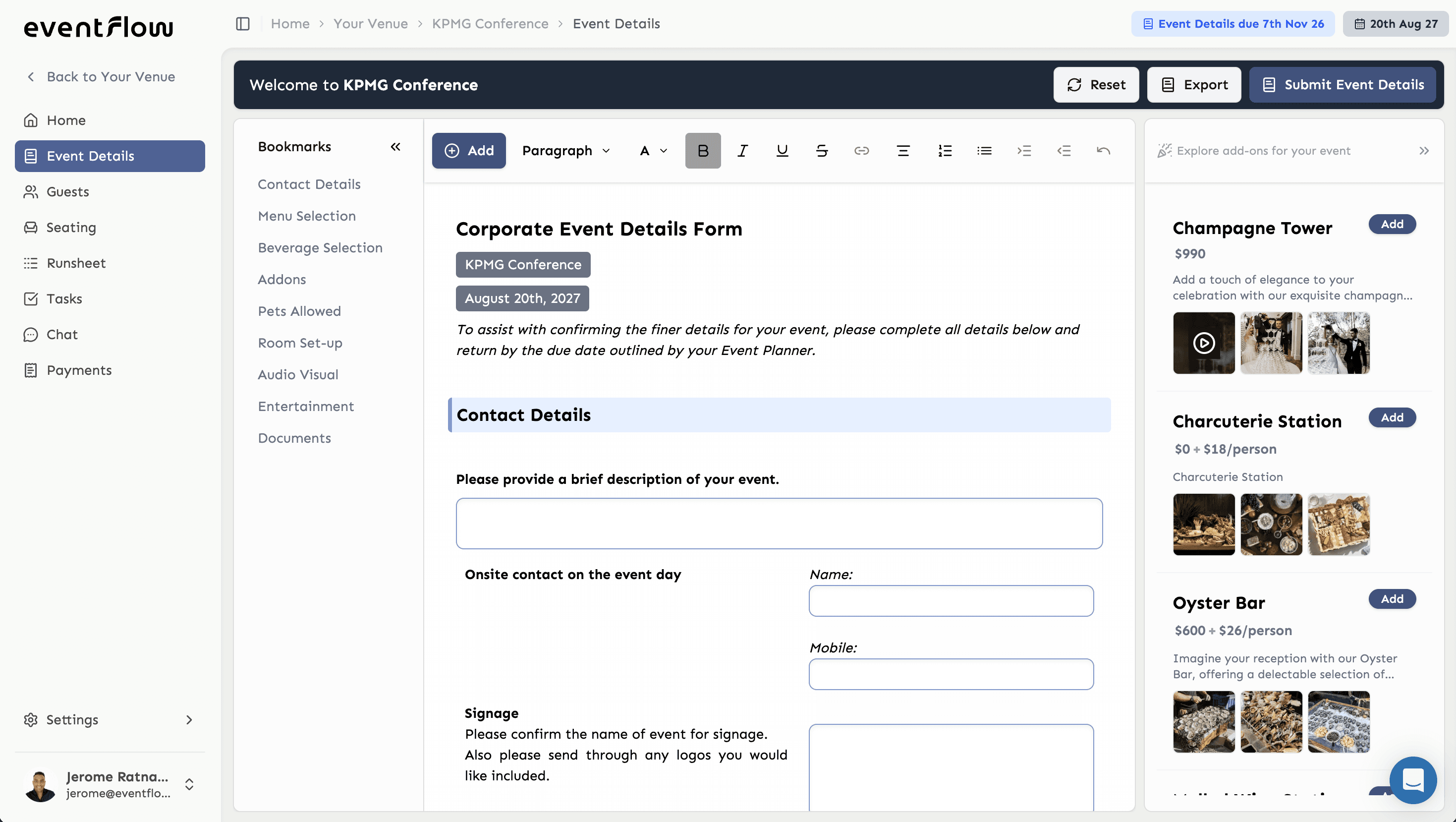
Every detail in one structured place.
Run sheets, suppliers, room setup, dietary requirements — all captured in a form built for events. Not a generic intake. Not a 14-page PDF.
3
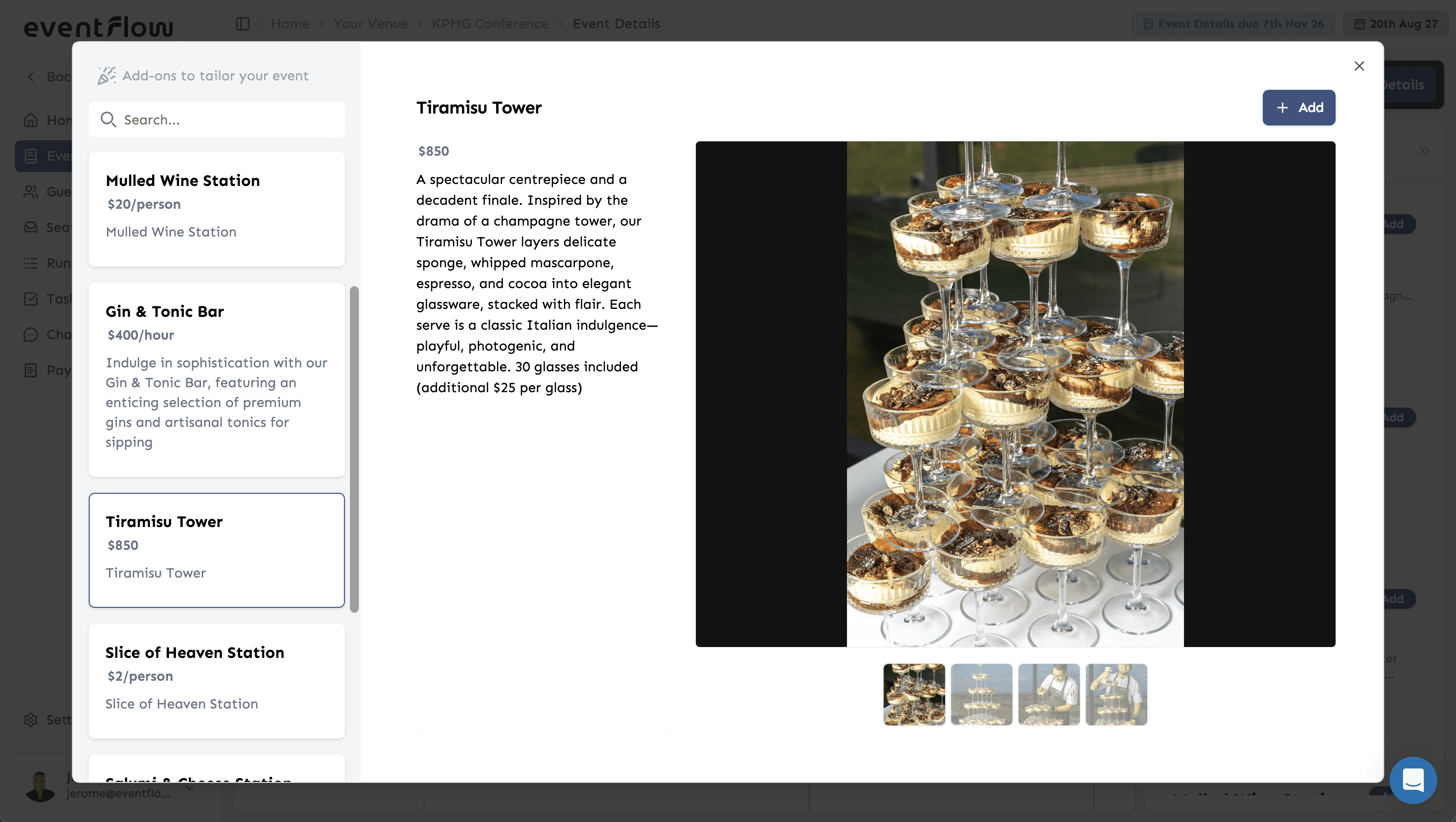
Turn planning into revenue.
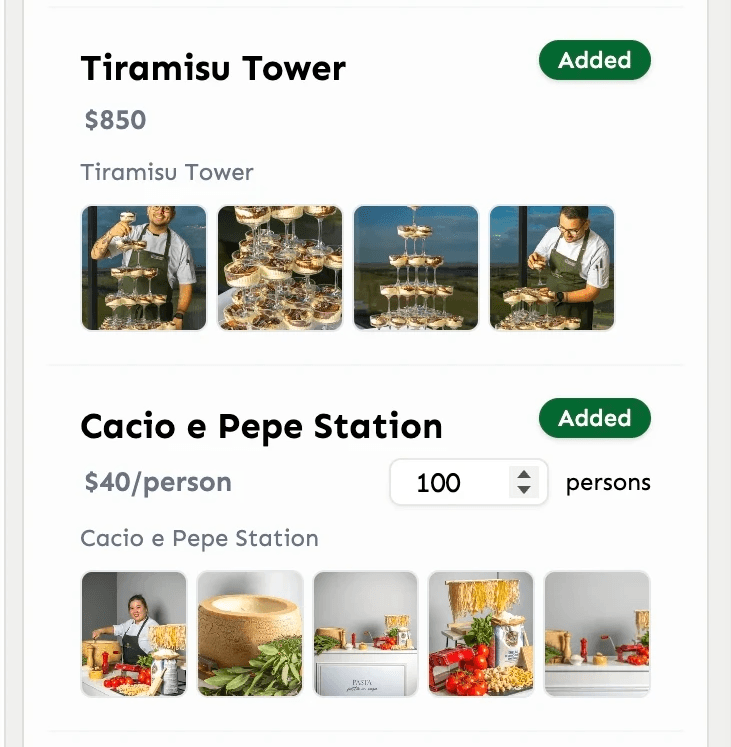
Surface AV upgrades, catering extras, and room add-ons at the moment clients are making decisions — with photos, video, and one-click add. Stop burying upsells in a PDF nobody reads.
4
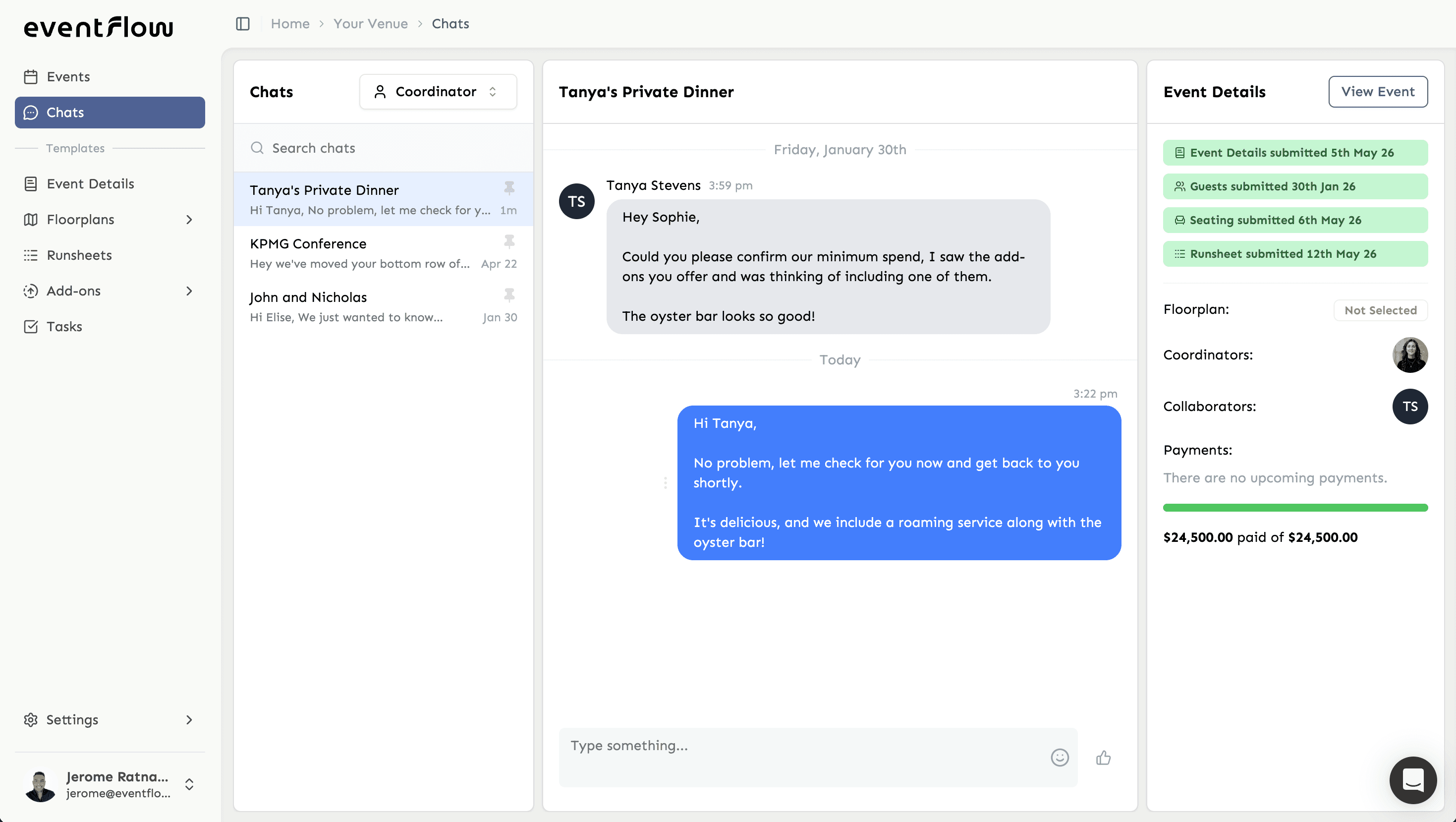
Conversations tied to the event.
Direct chat with clients, attached to the booking. No more hunting through email threads for what the bride wanted on the table, or what the conference organiser changed about the AV.
5
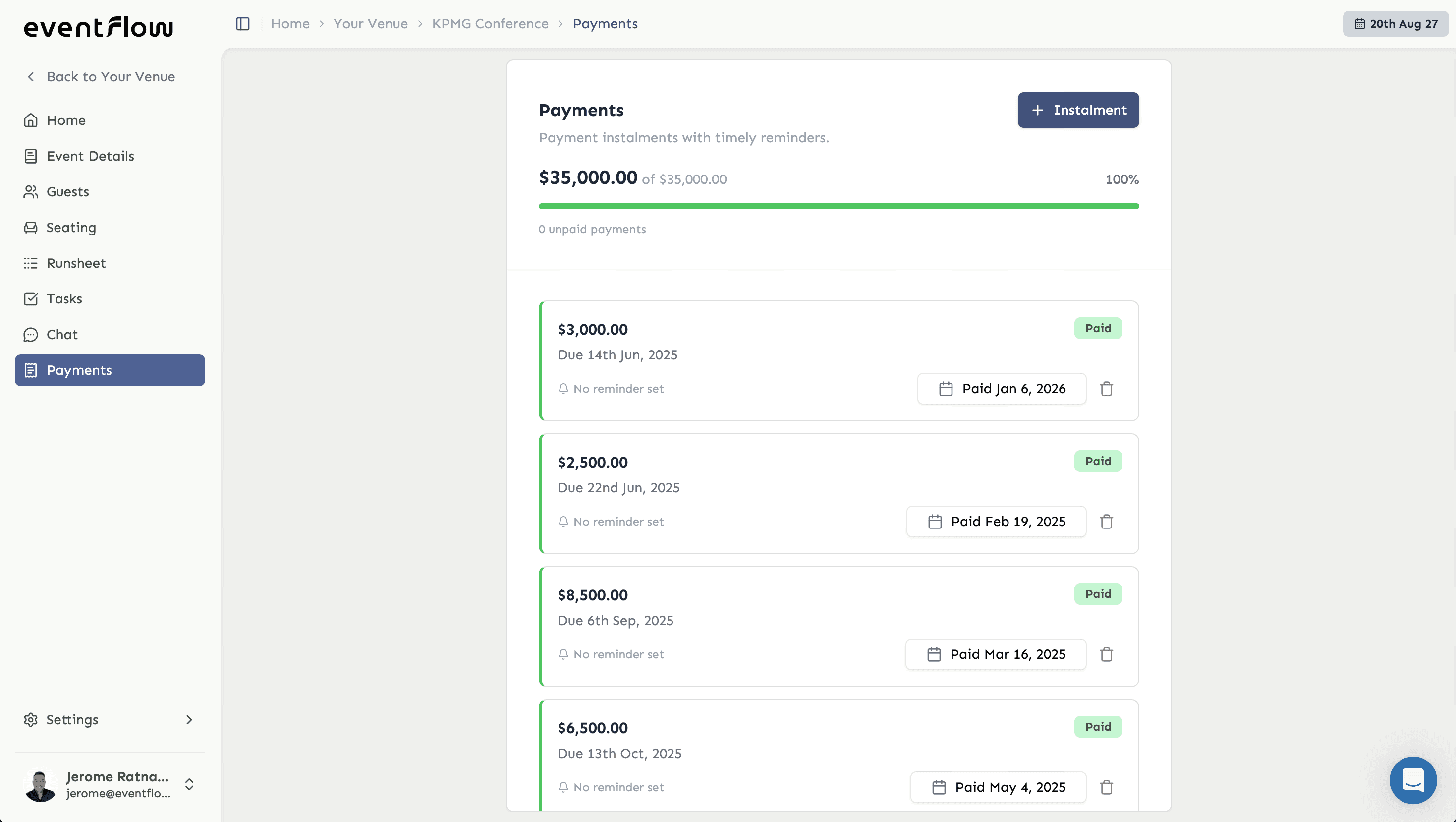
Nudge clients without chasing them.
Set due dates for documents and payments. EventFlow handles the follow-up emails. Your team stops being the chase team.
What changes when you run events through EventFlow.
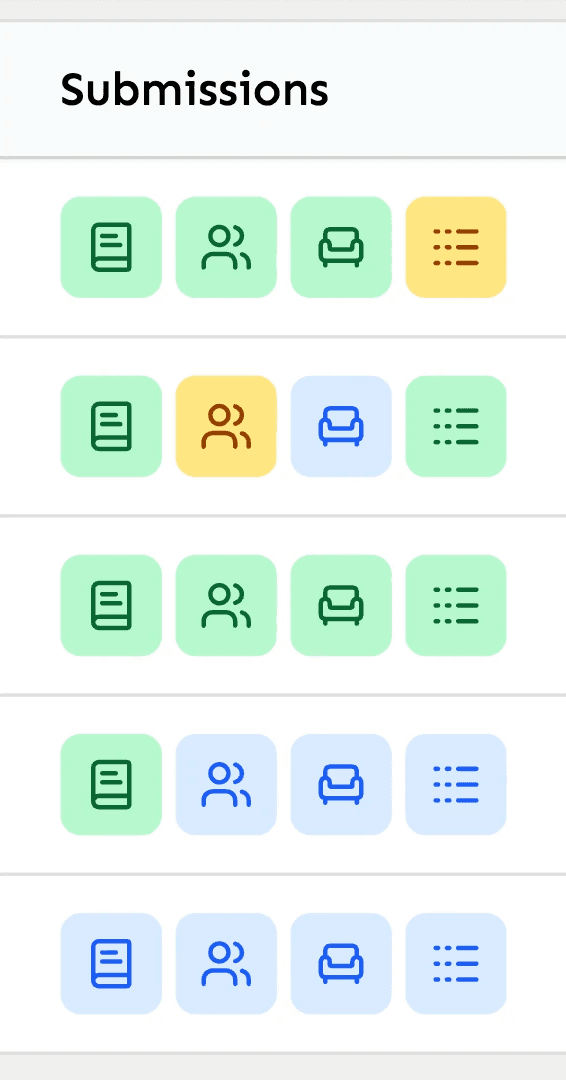
Three things shift the moment your venue stops planning over email.
Loved by venues & their clients





"EventFlow supports the relationship we have with our clients. By centralising information and improving transparency, it allows conversations to be more meaningful, proactive and relationship-focused, rather than administrative."
Alexandra Perry, MCG